
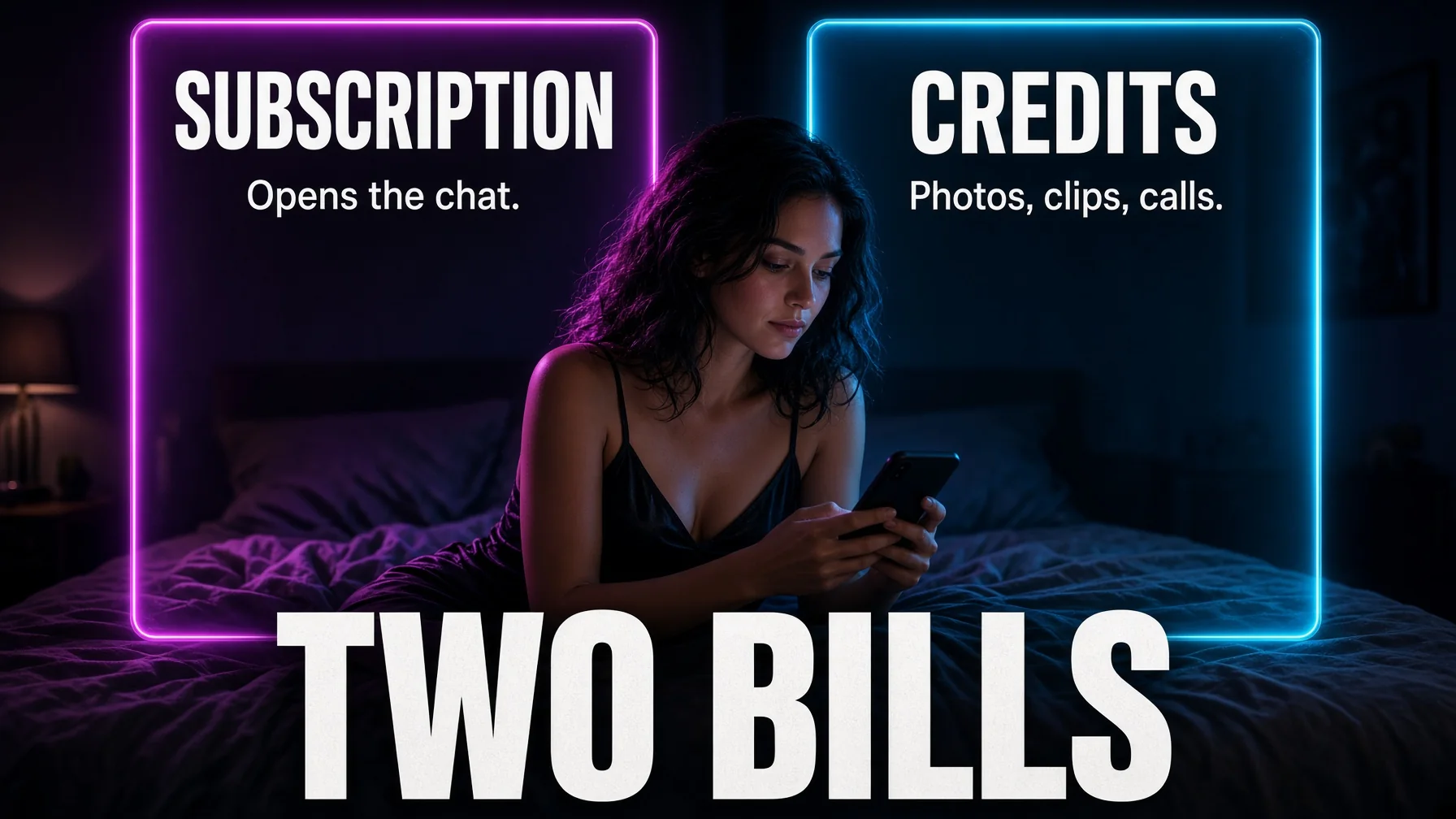
This guide explains how that billing actually works, what a monthly grant includes, when a pack is a second purchase, and how to read a plan page before subscribing. Prices differ by app. The structure is shared.
What credit billing means
Credit billing is a prepaid balance inside an AI companion account. The app deducts a set number of credits each time a paid action runs. A photo might cost a few credits. A short clip might cost many more. A voice call might cost credits by the minute. The deduction happens at generation time, not at the end of the month.

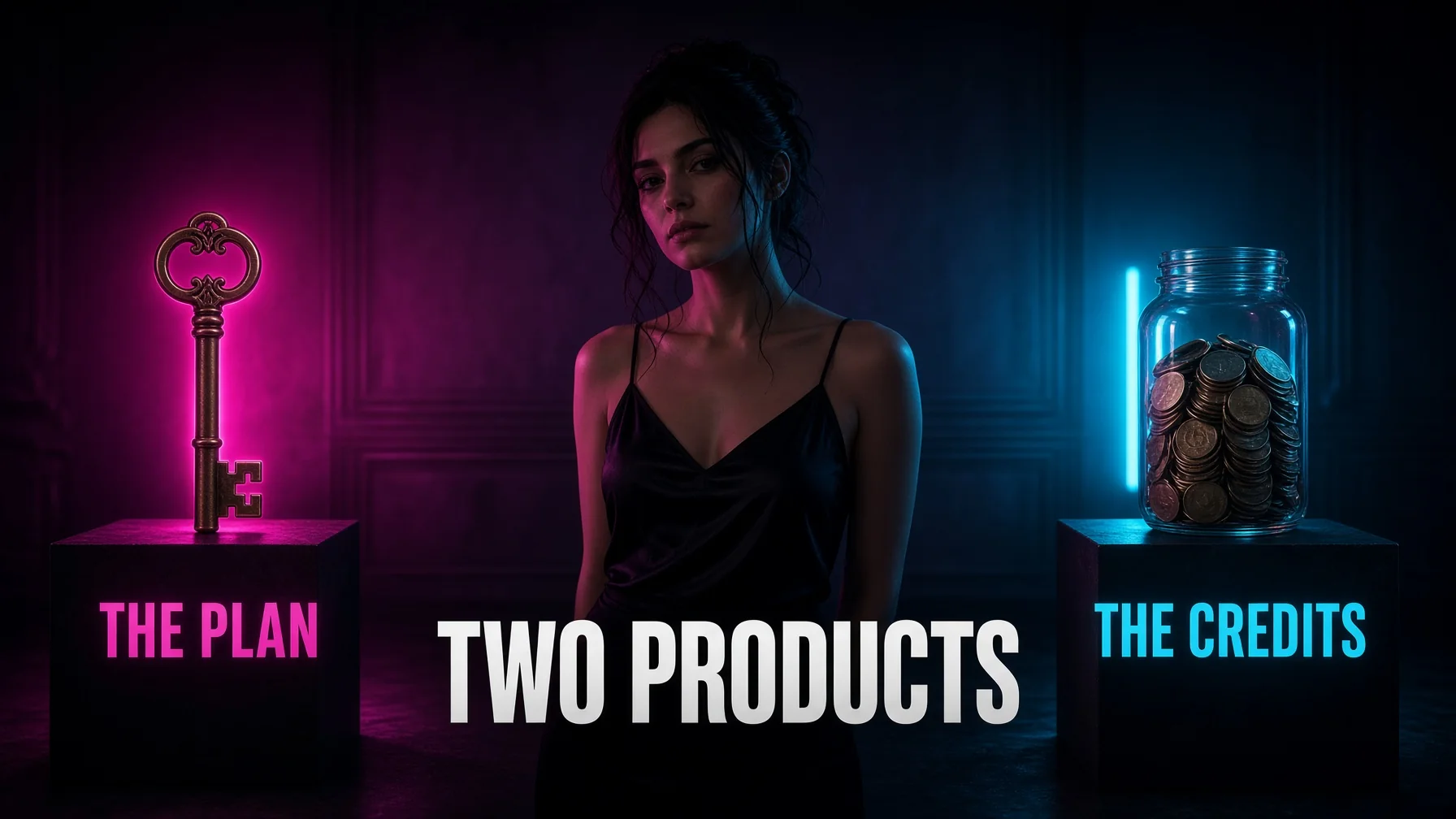
The subscription and the credit balance are different products sold on the same checkout. The subscription is the right to use the app: unlimited or capped chat, the character builder, unblurred photos, and access to the AI image generator. The credit balance is the fuel for the actions that create media. An account can be paid up on the subscription and still be unable to generate a picture if the balance is at zero.
That split is why two people on the same plan can have different months. One person chats and spends almost nothing. Another generates video every night and buys a pack before the period ends.
The names apps use for the same balance
Apps do not agree on a word. The balance may be called credits, tokens, coins, gems, chips, hearts, Moments, or DreamCoins. The name does not change the mechanic. Each unit is a deduction against a photo, a clip, a voice note, a call minute, an upscale, or a new character.
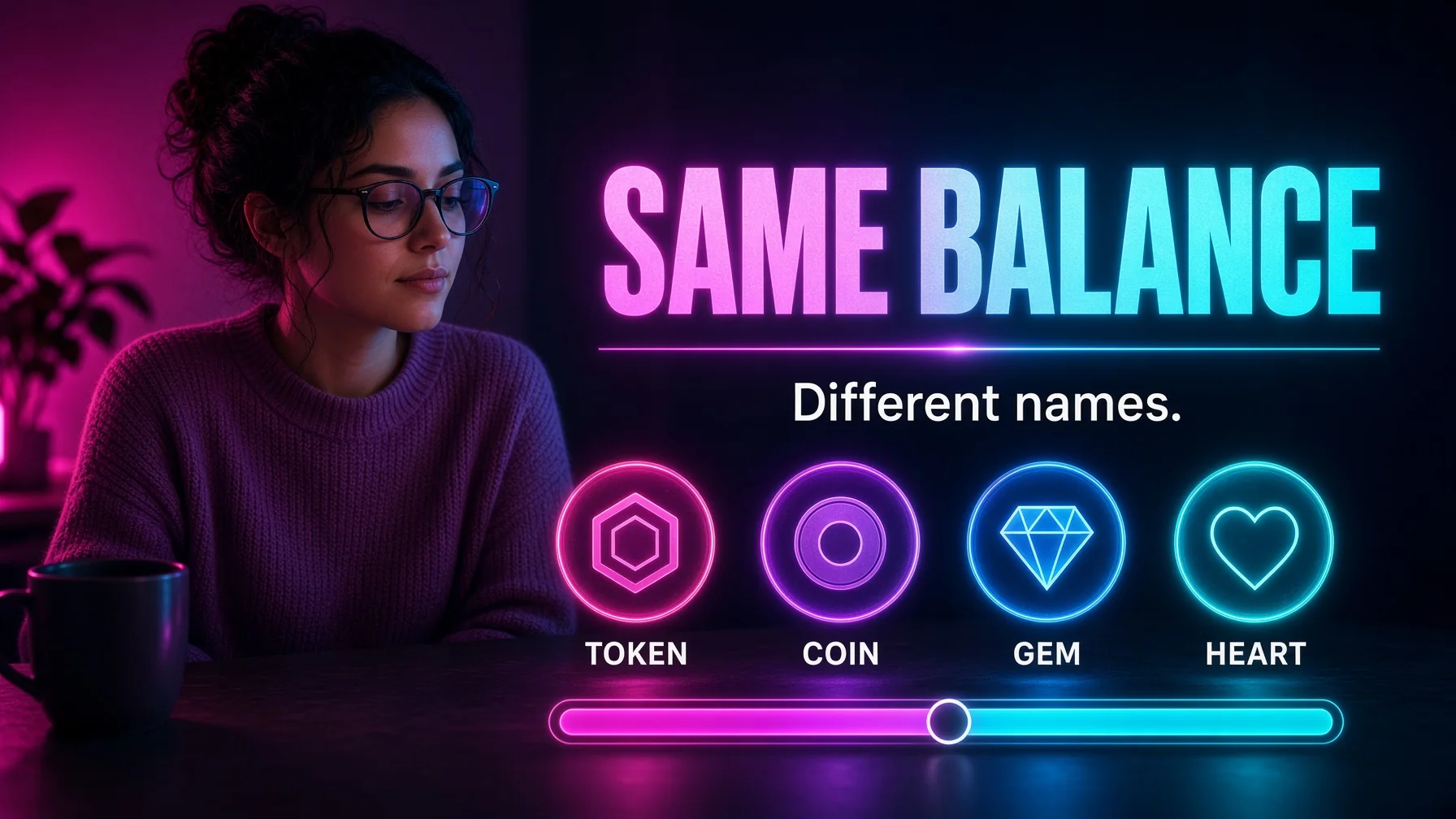
A reader comparing AI girlfriend pricing should translate the name before comparing the price. One hundred coins on one app are not one hundred gems on another. The useful comparison is what a typical photo costs, what a short clip costs, and how many of those actions the monthly grant covers.
Subscription and credits are two bills
Most paid AI girlfriend plans include both a subscription and a credit grant. The subscription renews on a date. The grant refills on that same date, or on a stated cycle. Buying the year does not usually remove the credit system. It lowers the subscription rate and sometimes adds a bonus grant.
A free account is often a short chat and a blurred photo. It may include a small starter balance, enough for one or two images. It is not the monthly grant. Judging an AI image generator from that starter balance is a weak test. The paid grant is the number that describes a normal month.
What the subscription usually covers
On a typical paid plan, the subscription covers:
- NSFW AI chat and AI sexting with a fictional adult, either unlimited or up to a daily message cap
- A character builder, or access to a roster of premade companions
- Unblurred photos, once a credit is spent to create them
- Voice notes or a call button, if the plan lists them
- Removal of a watermark on some higher plans
- The right to keep the conversation after the free cap
The subscription does not usually mean unlimited images. Unlimited chat is a message rule. Unlimited images is a different promise, and most apps in this category do not make it.
What the credit balance usually covers
The balance usually covers:
- A photo from the AI image generator
- A higher-resolution or edited version of that photo
- A short video or an extension of a clip
- A voice note, on apps that meter audio
- A live call, metered by the minute
- A new custom companion, on apps that charge to save a character
- An upscale or a face-related edit
Chat on a paid plan often does not spend credits. That is the detail people miss. The conversation can feel unlimited while the gallery is on a meter.
How a credit is spent
A generation has a listed cost. The app shows that cost before the image or clip runs, or it deducts it when the result arrives. If the balance is too low, the action fails or the app offers a pack.
Costs are not identical across apps, but the pattern is stable.
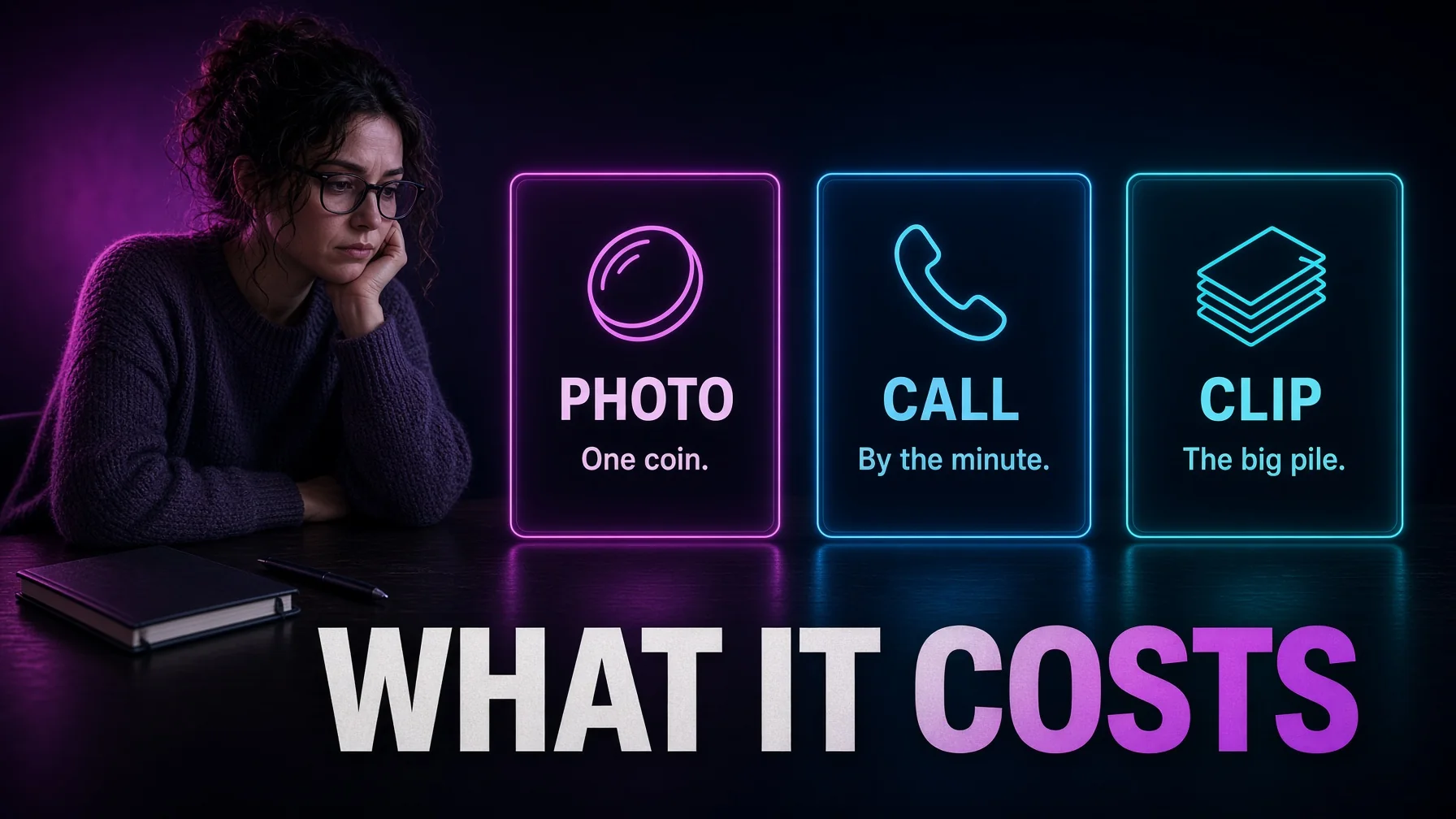
A basic photo is the cheap action. On some apps it is about 1 gem, about 2 coins, or about 5 to 10 coins. On others a photo is about 20 credits or about 30 credits. The unit size is arbitrary. What matters is how many photos the monthly grant can buy.
A short clip is the expensive action. A five-second video can cost as much as dozens of photos. A higher-quality or longer clip can spend most of a monthly grant in one or two runs. Voice calls sit between the two when they are metered by the minute.
A simple way to read a grant
Take the monthly grant and divide it by the photo cost, then by the clip cost. That is the real plan.
If a plan includes 1,000 credits and a photo costs 5, the grant is about 200 photos, or far fewer if the month includes video. If a plan includes 100 coins and a clip costs 10, the grant is about 10 clips, or about 50 photos if the month stays on photos. Apps sometimes print this conversion themselves. OurDream has described 1,000 coins as about 200 images, about 20 minutes of calls, or about 10 videos, only if the month is spent on one of those.
Those conversions are alternatives, not a stack. A grant cannot be 200 photos and 10 videos in the same month.
Monthly grants and bought packs
A monthly grant arrives with the subscription. It is included in the price already paid. A pack is an extra purchase of the same balance, usually at a stated price for 1,000, 2,500, 5,000, or a similar stack.
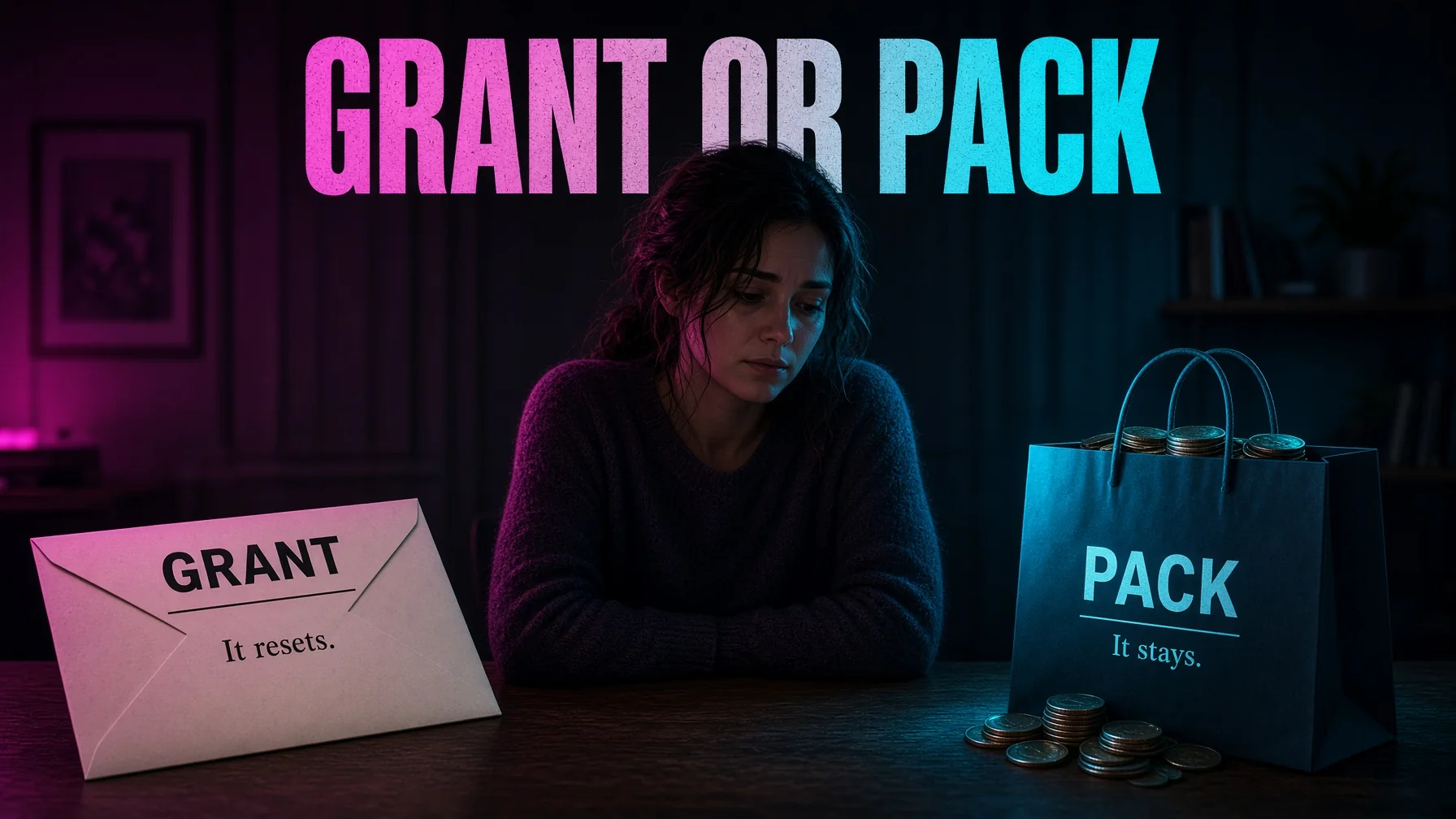
The grant and the pack do not always follow the same rules.
The grant often resets on the billing date. Unused grant credits may disappear. They are not a cash refund, and they may not roll into the next month. A pack is often the balance that stays until it is spent. Some apps say pack credits never expire. Others say unused credits of either kind can be removed when a cancelled plan ends.
That difference is the reason to spend the grant first. Buying a large pack because a bonus looked large is a poor move if the grant has not been used, and a worse move if the account will be cancelled before the pack is spent.
When a pack is the rational buy
A pack makes sense after the grant is gone and a specific face is worth another batch. It does not make sense as a default add-on at signup. The included grant is the test. If 100 tokens cover the photos a person actually wants, the pack is optional. If a single clip empties the grant, the plan is a video plan in disguise, and the pack price is part of the real monthly cost.
Pack rates are rarely flat. A small pack is often the weak rate. A larger pack costs less per credit. Comparing the pack price to the subscription is the useful check. On some apps, stepping up to a higher plan only to get more credits costs more than staying on the lower plan and buying one pack.
What rollover actually means
Rollover means unused credits survive into the next period. Most AI girlfriend apps do not offer it on the monthly grant. The grant refills. The unused portion is lost. Bought credits are more likely to remain, and even those can be tied to an active subscription. An app can require an active plan before bought credits can be spent.
A yearly plan does not automatically create rollover. It changes the subscription rate. The monthly grant may still reset every month inside that year. A welcome bonus of extra credits is usually a first-month addition, not a higher grant for every later month.
Readers should treat "credits included" as a monthly allowance unless the plan page says the balance carries over.
How a low headline becomes a larger month
The lowest number on a plan page is often a monthly rate on a yearly plan, or a day rate, or a first-month discount. None of those numbers is the cost of a heavy generate month.
A yearly rate of a few dollars a month can be a fair price for NSFW AI chat and a few photos. The same rate is incomplete if the month is video. Video spends the grant. The pack is the second bill. A person who generates clips every night should add at least one pack to the subscription before calling the plan cheap.
First-month discounts work the same way. The opening month is the sale. The renewal is the regular price. A plan at $11.99 for the first month and $14.99 after that is a $14.99 plan with a cheaper start. The credit grant may be identical in both months.
Day rates and period totals
Some apps print a daily figure. A rate of a few cents a day is the period split into a smaller number. The charge is for the month, the quarter, or the year. The total due on the payment step is the amount to read. A daily figure is not the amount taken from the card.
Photos, video, and voice are different meters
An AI image generator photo is the action most grants are built for. A modest grant of 100 to 600 units can cover a talking habit with occasional pictures. It cannot cover a studio.
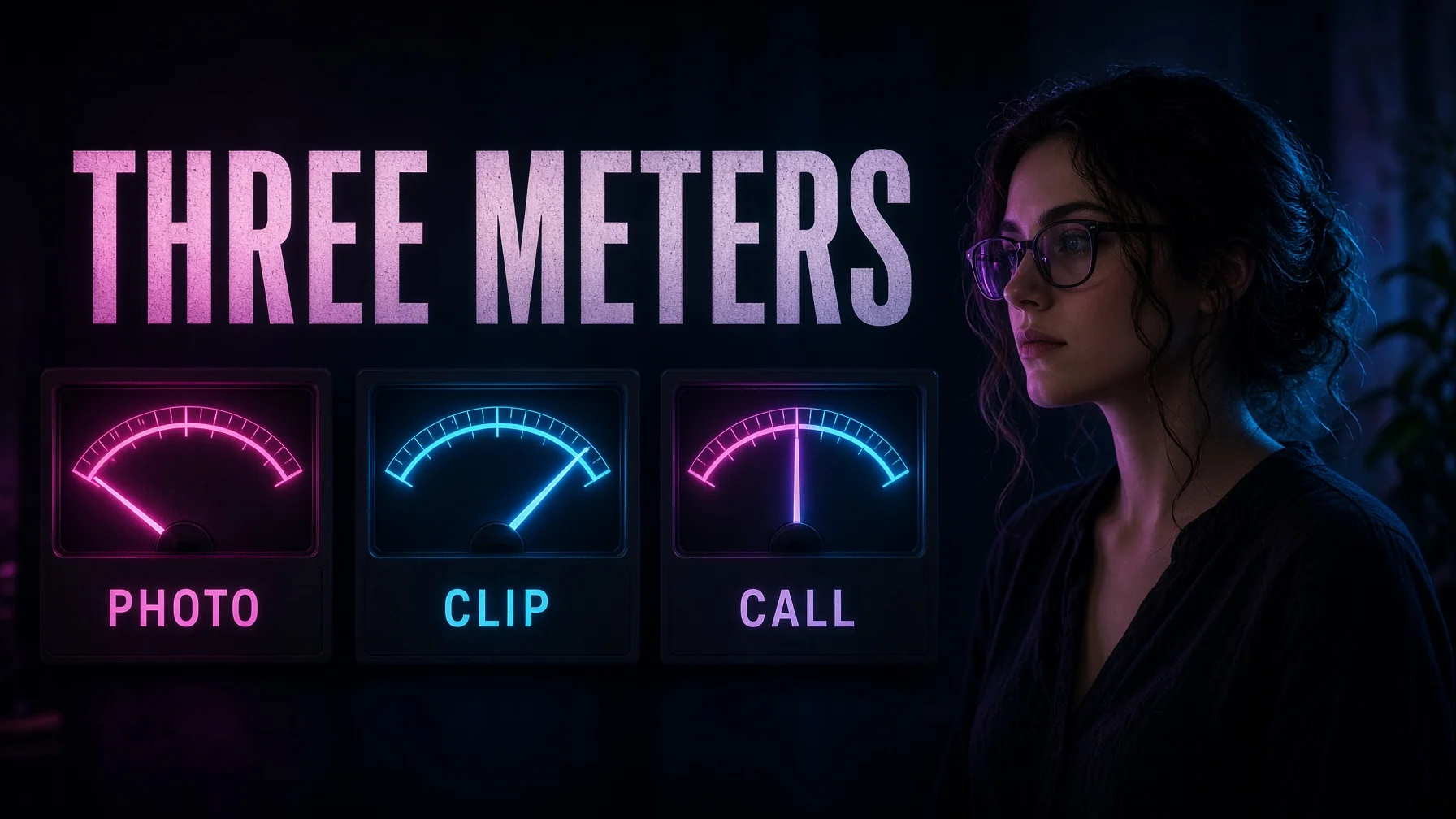
Short video is the action that breaks a chat plan. A five-second clip can cost as much as a large stack of photos. Extending that clip costs again. A plan that advertises video in the feature list is not promising that video is included without limit. It is promising that the button exists, and that the balance will pay for it.
Voice notes are often cheap or included. Live calls are more often metered. A call at about 50 credits a minute, or about 3 coins a minute, can spend a grant during one long conversation. A plan that lists calls should be read as a metered feature unless the page says the minutes are included.
A practical split
A chat-first month can stay inside a small grant. A photo-first month needs a grant that covers the photo cost times the number of images wanted. A video-first month needs either a much larger grant or a pack budget. Buying the video plan and then avoiding video is paying for a button. Buying the chat plan and then generating video every night is paying the pack price the plan page did not lead with.
How to read a plan page
A plan page is readable if it answers five questions.
- What is the amount due today?
- What renews, and at what price?
- How many credits arrive with this payment?
- What does a photo cost, and what does a clip cost?
- Do unused credits remain, or do they reset?

If the page answers the first two and skips the last three, the credit system is the missing part of the price. The subscription figure alone is not the bill.
Discounts and crossed prices
A crossed price beside a lower price is the regular rate and the current offer. The lower figure is the amount due if the offer is live. The higher figure is the comparison. Offers move. A 50, 60, or 70 percent reduction belongs to the checkout in front of the buyer, not to a screenshot from another month.
A first-month price should be read next to the renewal price. If those two numbers differ, the renewal is the lasting bill.
Currency
Some apps list dollars and euros on different checkouts. A euro price and a dollar price are not the same plan with a translation. Confirm the currency on the payment step. A plan at €6.99 is not automatically a plan at $6.99.
Cancellation, refunds, and leftover credits
Cancel means the subscription will not renew. It does not always mean the current period ends immediately. Access usually lasts until the date already paid. Credits from the grant may remain until that date and then expire. Credits from a pack may remain longer, or they may be locked when the plan ends.
A refund window, when one exists, is a separate rule. A 30-day money-back line does not automatically return a used token pile. A trial that renews into a monthly plan will charge the monthly price unless it is cancelled before the trial ends.
Lifetime and one-time crypto payments do not renew. There is no monthly date to cancel. The payment is spent. The credit grant, if it continues, continues because the lifetime terms say so, not because a card will be charged again.
Bank line
Discreet billing means the card statement uses a neutral descriptor instead of an adult product name. That is a claim on the plan page. The name on the first charge is the confirmation. Some apps print the brand. A virtual card is the practical choice if the descriptor should not appear on a shared statement.
Worked examples from common plan shapes
These examples use the structures that show up across AI companion pricing. They are illustrations of the billing mechanic, not a promise that a live checkout still matches the figure.
A small coin grant next to unlimited chat
A plan at about $10 to $15 a month includes unlimited messages and about 100 coins. A photo costs about 2 coins. A clip costs about 10. The month can hold about 50 photos, or about 10 clips, not both. The year of that plan, sometimes near $70, is a chat plan with a light photo habit. Video is a pack.
A larger chip grant on a yearly companion plan
A plan near $6 a month on the year includes about 600 chips. Photos are the cheap action. Clips spend the pile faster. The same app may sell a higher plan with 3,000 chips and the watermark removed. The higher plan is a generate plan. The lower plan is a chat plan with occasional pictures. Lifetime, at a few hundred dollars once, only fits if the account stays active long enough for the monthly chip grant to matter.
A gem plan with a first-month discount
A plan at about $12 for the first month and about $15 after that includes about 100 gems. A higher plan includes 400 or 800. A basic photo is about 1 gem. Video and maximum quality cost more. The first month is the trial of the renewal price. Custom characters and 4K may sit only on the top plan.
A credit plan where chat is also metered
Some apps meter messages as well as images. A $10 plan might include a few thousand messages and a separate credit balance for photos. Only a higher plan removes the message cap. Unlimited chat is then a feature of the top price, not of every paid row. Credits still pay for images and video on top of that.
A day rate with a heart balance
A plan printed as a daily figure can total about $10 for a month, about $24 for three months, or about $47 for a year. Bonus hearts, a few hundred on the shorter lengths and more on the year, pay for photos and clips. Chat on the paid plan does not spend them. The daily figure is not the charge. The period total is.
Why the free tier cannot answer the price question
A free account answers a different question. It shows whether a companion can hold a first scene, and whether the photo is blurred. It does not show the monthly grant, the clip cost, or the renewal. A starter balance of 15 gems, 20 hearts, or a couple of photo asks is a sample.
The price question starts on the paid plan: amount due, renewal, grant size, and the cost of one photo and one clip.
How to buy without paying twice by accident
The purchase path is similar on most of these apps.
- Create an account and confirm the email if the signup asks for it.
- Open one companion and send a few messages before paying.
- Open Upgrade.
- Choose the plan length. Read the amount due today and the renewal price.
- Leave the credit pack unchecked unless the grant is already known to be too small.
- Enter the card details, check the descriptor if it is visible, and confirm.
- Return to the account and read the credit balance. It should match the grant on the plan.
A pack can be added later, after the grant has been used on a face worth keeping. Adding it at signup buys a balance before the product has been tried.
What to ignore on the plan page
Large visitor counts, countdown banners, and a percentage off a crossed price are not the bill. The bill is the amount due, the renewal, and the credit rules. A badge that says best value is a label. The yearly total compared with twelve monthly charges is the calculation.
A plan that lists video, voice, and unlimited images in one row still needs the credit line read. If images are unlimited and credits are also listed, the unlimited claim and the credit claim contradict each other. The credit line is the one that will stop a generation.
The difference between a message cap and a credit balance
Some AI girlfriend apps limit the conversation and the gallery with two different meters. A message cap counts lines. A credit balance counts generations. A plan can have unlimited messages and a small credit grant. Another plan can cap messages at a few hundred a day and still charge credits for every photo.
Reading only one meter produces the wrong expectation. A person who buys a plan for AI sexting and never opens the image generator may never notice the credit balance. A person who buys the same plan for an AI porn generator will meet the balance on the first batch. The plan page should be read for both numbers: messages per day, and credits per month.
A higher plan sometimes removes the message cap and enlarges the credit grant at the same time. That is two upgrades in one price. If the message cap was never reached, the only new thing being bought is the larger grant. A pack on the lower plan may be the cheaper way to get those credits.
Daily caps inside a monthly grant
A monthly grant can also be paired with a daily photo cap. Forty photos a day, for example, is a pace limit even when the subscription is paid. Extra credits may lift the cap, or they may only apply after the daily limit resets. The grant and the daily cap are both limits. Hitting either one stops the gallery.
How video billing differs from photo billing
Photo billing is usually a flat deduction. One image, one price, sometimes a higher price for a larger resolution or a second pass. Video billing is less predictable because length and quality change the cost. A five-second clip is not the same product as an eighteen-second clip. An extension is often a second charge on the same clip.
Apps that list video on every paid plan are listing access. The credit cost is the usage fee. A plan with 600 units and a clip that costs 100 to 300 units can produce a handful of clips. A plan with 100 units and a clip that costs 10 can produce about ten, and then the studio stops. A plan that prices a five-second clip at more than a thousand units will produce only a few clips even on a larger grant.
This is why a chat review and a studio review of the same app can disagree on value. The chat review is pricing the subscription. The studio review is pricing the grant plus packs. Both can be accurate.
Quality settings change the deduction
A draft image and a final image are often different prices. Maximum quality, upscale, and audio on a clip add to the base cost. Running the highest setting on every prompt is the fastest way to empty a grant that would have lasted the month on standard photos. The generator usually shows the cost before the run. That number is the one to trust, not a blog estimate from another month.
Voice notes, calls, and why they are easy to underprice
Voice notes are often the cheapest media action, or they are included in the subscription with a daily count. Three notes a day on one plan and thirty on another is a count, not a credit price. A live call is more often a credit meter. A minute rate turns a long conversation into a media purchase.
A plan that advertises phone calls should be checked for three limits: whether the call exists in the buyer's country, whether there is a daily minute cap, and whether each minute spends credits. A call feature that cannot ring outside one country is not a reason to buy the top plan from somewhere else. The credit cost is irrelevant if the call cannot be placed.
How to estimate a month before subscribing
A workable estimate uses four numbers from the plan page.
- Subscription amount due today
- Renewal amount
- Monthly credit grant
- Listed cost of one photo and one short clip
Multiply the photo cost by the number of images wanted in a month. Multiply the clip cost by the number of clips. Add them. If the total is under the grant, the subscription is the bill. If the total is over the grant, subtract the grant and price the remainder as a pack. That pack price plus the subscription is the realistic month.
This estimate should be done before the yearly plan. A year locks the subscription rate. It does not lock the pack price. A person who will buy a pack every month should compare the yearly subscription plus twelve packs with the monthly subscription plus twelve packs. The year still wins on the subscription. It does not remove the packs.
Common mistakes when comparing AI girlfriend pricing
Comparing the lowest monthly rate across apps ignores the grant. A $5 plan with 50 credits is not cheaper than a $13 plan with 1,000 credits if the use is images. Comparing credit counts across apps is just as weak, because a credit is not a standard unit. The photo cost and the clip cost are the translation.
Another mistake is treating a feature list as a usage right. Video in the list means the button exists for paying accounts. It does not mean the grant can fund a clip every night. Voice in the list may mean notes, not a live call. Unlimited in the list may mean messages, not images.
A third mistake is buying the top plan to avoid thinking about credits. The top plan still has a grant. It is larger. It can still run out. The top plan is the right buy when the extra tools, such as 4K, a watermark removed, or a longer memory, are actually needed. It is the wrong buy when the only gap is a few more photos.
How cancellation interacts with a credit pack
Cancelling stops the next subscription charge. It does not always restore the last charge. The period already paid continues. Grant credits may expire at the end of that period. Pack credits may survive, or the terms may say they are forfeited when the plan ends. Reading that sentence before buying a large pack is the difference between a balance that can be used next month and a balance that dies with the subscription.
A lifetime purchase has no renewal to cancel. The question there is whether the monthly grant continues, and for how long. A lifetime that includes a monthly credit grant is a bet that the account will still be in use when those grants have added up past the one-time price.
What the free account usually is
A free account is a way to look at the app before a card is added. It is not a credit plan, and it does not include the monthly grant that paid plans use for photos and clips.
What a free account includes depends on the app. Chat Roger has opened with a balance of 0 credits, so the catalogue can be browsed and the photos stay locked. Swipey has started some accounts with about 20 hearts, which is enough for a short look at the generator. Nectar has capped free chat at about 15 messages a day. LustCrush has capped free chat at about 10 messages a day, with a few coins added from daily check-ins. Coquette and Tyan have left spicy photos blurred until a plan is paid.
Those limits are enough to learn the layout and to hear whether a companion can hold a first scene. They are not enough to judge the gallery. The cost of a normal month of pictures is the paid grant, divided by the cost of a photo or a clip.
Questions
What is credit billing on an AI girlfriend app?
Credit billing is a balance, under a name like tokens or coins, that pays for photos, clips, and sometimes voice. The subscription opens the chat. The balance pays for media.
Does unlimited chat include unlimited images?
Usually no. Unlimited chat is a message rule. Images and video spend credits unless the plan explicitly says generation is included without a balance.
Do unused credits roll over?
Monthly grants usually reset. Bought packs are more likely to remain until spent. The plan page has to say which rule applies. Cancellation can remove unused credits at the end of the period.
Why does a cheap plan cost more later?
The subscription is the first charge. A clip or a long call spends the grant. A pack is the second charge. Video-heavy months are where the headline rate stops describing the bill.
What should be checked before subscribing?
The amount due today, the renewal price, the size of the credit grant, the cost of a photo and a clip, and whether unused credits expire. A virtual card is the practical choice if the bank line should stay neutral.
Credit billing is workable when the subscription matches the chat and the grant matches the photos. It is a poor fit when video is treated as included. The plan page has the numbers. The generation button is where they get spent.
Characters on these apps are fictional adults. This page is for readers 18 and over.
How image generation is priced inside the chat
In-chat image generation is the spend most people meet first. The companion is already in the thread. A photo button, or a line in the composer, asks the AI image generator for a frame of that same woman. The charge is a small number of credits, and it is taken when the job starts, not when the frame is liked.
A basic photo is the reference price. Shops that print a cost at all tend to land a simple still between 1 and 10 units, with a cluster around 2 to 5. Higher resolution is a second price. A 1K frame and a 2K frame on the same app are not the same job. One tested pattern is a rough doubling: 50 units at the lower size, 100 at the next. An upscale after the fact is its own line, often cheaper than a new generate and still not free.
Failed frames still cost money on most meters. A hand that breaks, a lamp in the wrong place, or a face that drifts is another run. Image edit, where it exists, is the cheaper correction. Changing a sweater on a keeper costs less than rolling a new woman, and it keeps the credit spend attached to one face. Shops without an editor make every mistake a full-price generate.
Private storage is sometimes capped by plan rather than by credits. A paid row may allow 2,500 private photos, or 5,000, or an unlimited album. The cap is not the meter. A full album of blurred previews is not a bill. A night of new generates is.
Batch size changes the pace, not the unit cost. Four images at a time on a lower plan and twelve at a time on a higher plan still charge per frame. The faster queue is a plan feature. The credit is the media feature.
How short video is priced
Short video is a generate with a clock. Text-to-video starts from a sentence. Image-to-video starts from a photo that already worked. The second path is the one that belongs in a companion app, because the face is already known. The credit cost is still higher than the photo it started from.
Length is the multiplier. A three-second sway, a five-second turn, and a fifteen-second scene are not one product. A shop that prices a five-second clip at more than a thousand units, against a monthly grant of eight thousand, is telling the truth in the meter: a handful of clips, then a pack. A shop that prices a ten-second clip at about a hundred credits, against a grant of a thousand, is telling a softer version of the same truth.
Quality modes multiply again. A lite pass, a fast pass, and a max pass can sit on one button. The max pass is how a single clip spends the month. Extending a clip, or adding audio, is another multiply. People who want the woman in the thread to move for a few seconds can live on the cheap mode. People who want a scene will not, and the plan page should not pretend they will.
Video also fails in ways a photo does not. A broken joint, a shoulder that slips, a loop that restarts, still spent the units. Regeneration is not always offered. That is a reason to spend on a keeper photo first, and only then on motion.
How voice notes and live calls are priced
Voice notes are the small audio spend. On some apps they are included with Premium and do not touch the balance. On others a note costs one unit, and a live call costs two units to start or a rate per minute after that. The plan list can say "voice" for both and mean only the note.
A per-minute call is the line to convert before buying a top tier. Three units a minute against a hundred-unit grant is about half an hour if the night is only the call. A coin a second is a different product. Thirty to sixty minutes a day as a cap, on top of a credit rate, means the call can end for either reason. The account page, not the feature grid, has the rate.
Calls that require a linked phone number, or a single country, are a third limit. The credit can be full and the call can still refuse to start. That is not a billing bug. It is an eligibility rule sitting next to the billing rule.
Character creation, training, and unlocks
Building a companion is free on some apps and metered on others. A wizard that asks for a look, a personality, and a scene, then saves her, may cost nothing until the first photo. A shop that charges six or ten units to mint a card is charging for the slot, not for the chat that follows.
Training a likeness from uploaded photos is the expensive version of creation. It can cost a large block of credits, and it can be blocked on one payment processor even after the plan is paid. The rule that matters beside the price is consent. A trainer is for a verified adult who agreed. It is not a tool for a stranger's photos. The credit cost does not change that.
Unlocks are the quiet spend. A member card, a later episode, a premium frame, a face swap, or an undress pass on an upload can take units without looking like a generate. The balance drops. The chat looks the same. Reading the cost on the button before the tap is the only protection, because these actions are easy to treat as part of the subscription.
Plan ladders and what actually changes
A ladder usually changes three things: the price, the grant, and one or two tools. It rarely changes the existence of the meter.
A low plan may be chat, a small grant, and HD photos. A middle plan may raise the grant and the resolution. A top plan may add video, remove a watermark, lengthen memory, or open a call. The top plan is not "unlimited" unless the sheet retires the balance. Most top plans raise the balance and leave the meter in place.
Annual, quarterly, and monthly lengths often share the grant. The year changes the rate. A first-month bonus on the year is a one-time refill. Comparing a $9.99 month with 1,000 credits to a $49.99 year with 1,000 credits a month is a comparison of the subscription, plus whatever welcome pile the year printed.
Ultimate, Diamond, and lifetime rows are capacity. They fit a person who already generates every night. They are a poor default. A lifetime payment of a few hundred dollars still depends on the monthly grant being used. Six quiet months do not refund the difference.
Currency, processors, and the bank line
Checkouts mix dollars and euros. A plan at €6.99 and a write-up at $7.99 can be the same row in different currencies, or a sale that moved. The amount on the payment step is the one to trust. Crypto lengths are sometimes one-time and do not renew. Card lengths usually renew.
Discreet billing means the statement line is plain. It does not mean the credit purchase is invisible. A pack can post as a separate charge. A renewal can post on the yearly date. Adult wording may be absent and the charge can still be there.
High-risk processors sometimes block uploads. A card that pays for the plan and then refuses a face upload is a processor rule. Another processor, or crypto where it is offered, may open the upload. That choice belongs in the budget if training is the point.
A worked month
Take a plan at $12.99 with 100 coins, a photo at 2 coins, a call at 3 coins a minute, and a short clip that can spend the grant in one run.
A chat-only month costs $12.99. Ten photos cost 20 coins and leave 80. A fifteen-minute call costs 45 coins and leaves a smaller remainder. One max clip can end the grant and push the next photo onto a pack. The subscription did not change. The habit did.
The same shape appears on a plan at $9.99 with 1,000 credits, a photo at 30, and a clip at 100. About 33 photos, or 10 clips, or a mix that dies sooner. A year at $49.99 does not change the 30 or the 100. It changes how often the $9.99 is paid.
These figures are illustrations from public sheets. A different app will print different unit costs. The method is the part worth keeping: grant divided by the action you actually use, then the subscription added on top.
Mistakes that make the bill larger than the headline
Treating the monthly rate on a yearly plan as the amount due today. The charge is the period.
Treating a welcome bonus as a permanent grant. It is often once.
Buying the small pack because it is the first button. The rate per photo is worse.
Generating video to test the button. The test is the expensive action.
Assuming a failed frame was free. It usually was not.
Cancelling and expecting unused credits back as cash. The next subscription charge stops. The units often do not return.
Judging the app on a free balance of 15 or 20 units. That balance is a sample of the button, not of the month.
How this page can be used
A comparison of AI girlfriend pricing is incomplete without the credit line. Two apps at $9.99 can differ by a grant of 100 and a grant of 1,000, and by a photo cost of 2 and a photo cost of 30. The cheaper subscription can be the more expensive studio.
The citable facts are simple. Credit billing is a subscription plus a balance. The balance pays for media. Grants usually refresh. Packs are a separate purchase. Video costs more than photos. The amount due today is the charge. The live checkout overrides any example on this page.
Characters on these products are fictional adults. This guide is for readers 18 and over.