
OurDream AI
Adult text roleplay
OurDream does not hand you a girl.
A slow-burn romance becomes more interesting when a fictional character has something to remember, a reason to hesitate and a personality beyond the opening compliment. The best adult text roleplay apps provide different controls for that experience, from character backgrounds and scene notes to alternate conversations and editable replies.
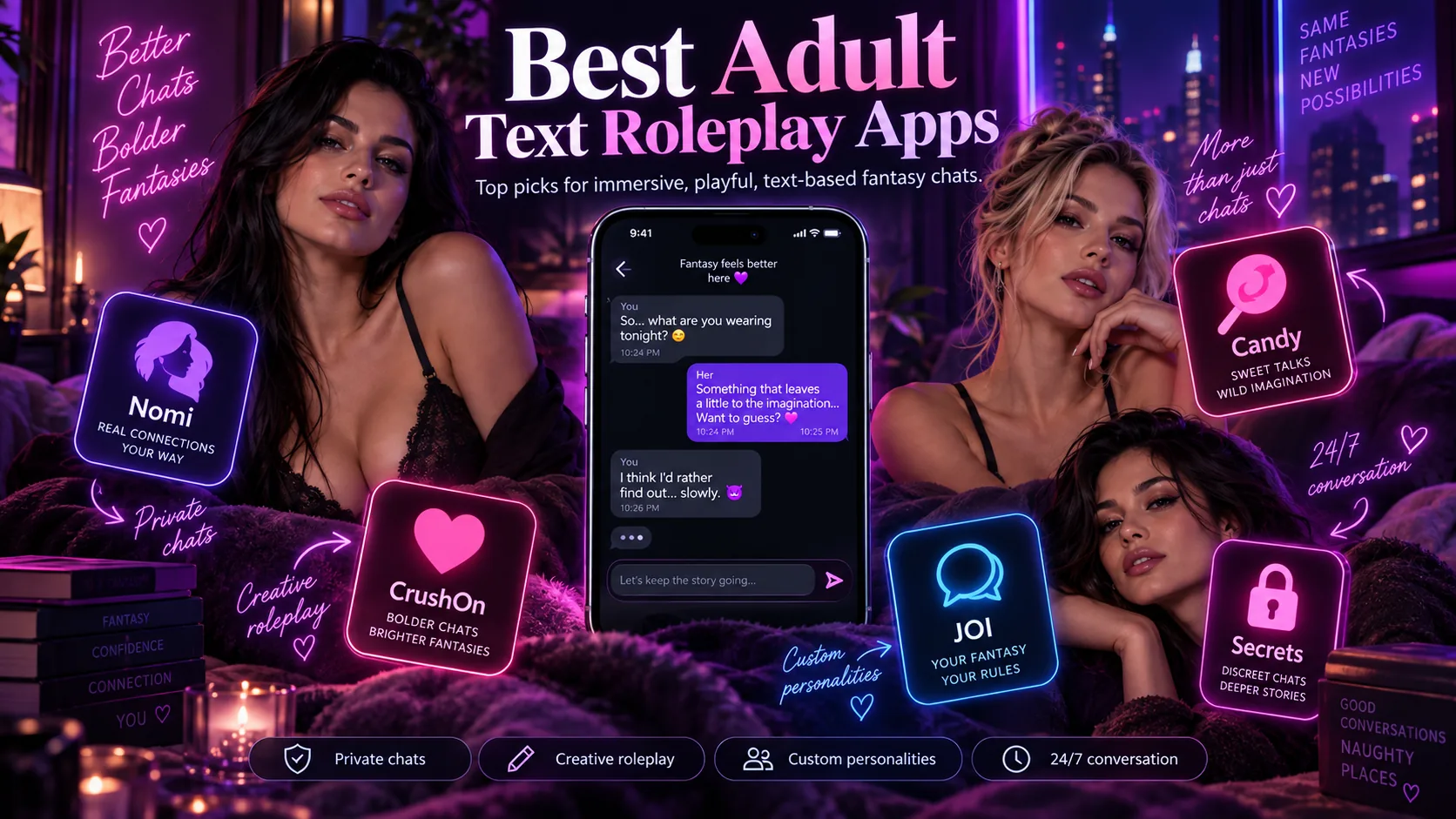
Adult text roleplay
OurDream does not hand you a girl.
Adult text roleplay
Candy is for the night you want NSFW chat with a girl who remembers.
Adult text roleplay
Secrets is a cheap yearly Premium, icebreaker scenes, a Call button, and a photoreal girl you designed.
Text is the focus here. A convincing exchange needs room for dialogue, actions and choices, without turning every response into an image request or a finished story that leaves the participant nothing to do. Some apps favour an ongoing relationship; others put more emphasis on directing a scene or revising its outcome.
The useful comparison is therefore between writing controls, continuity and the actual cost of sustained chat. Attractive character portraits are optional. A suitable reply format and a clear understanding of message limits matter much more.
Secrets AI suits structured storytelling through editable Lorebooks and reusable world material. Nomi separates an ongoing character background from the current roleplay, making it relevant to recurring relationships. Candy AI offers a different advantage: cloned conversations that preserve the original while an alternative path develops. These are use-case recommendations, not measured claims about which app writes the most convincing dialogue.
The comparison considers character setup, participant control, reply format, memory tools, editing behaviour and the cost of sustained text conversations. Product documentation establishes which functions are available, while the individual AIGirlfriend.games pricing guides provide subscription and allowance details. This is a research-based comparison, not a hands-on writing test. The numbered order follows the supplied selection rather than a performance ranking, and documented memory features are not treated as proof of flawless recall.
All prices below are in USD. Monthly subscriptions and upfront annual charges are kept separate. Free access is restricted unless a specific ongoing option is identified; a paid starting price does not necessarily include every advanced writing control.
| App | Strongest use | Useful text control | Free access | Paid starting point |
|---|---|---|---|---|
 OurDream | Relationship-led character design | Backstory and group speaker selection | Limited chat | Premium $19.99/month |
 Candy AI | Alternative story paths | Clone Chat preserves the original | Short chat sample | Premium $13.99/month |
 Secrets AI | Editable story continuity | Lorebooks and conversation rewinds | Limited access; signup offer | Premium $109.99/year upfront |
 CrushOn AI | Models and participant personas | Profile Cards and response settings | Free models with restrictions | Standard $5.99/month; advanced options cost more |
 Nomi | Recurring relationships | Backstory+ and Current Roleplay | One Nomi; daily cap | Standard $15.99/month |
 Joi AI | Adjusting conversational tone | Personality refinements and bookmarks | Limited chat | Premium $13.99/month |
 GoLove AI | Ready-made romantic setups | Character and scenario selection | Short chat sample | PRO $19.99/month |
 Crushi AI | Detailed character writing | Opening-message and reply editing | Capped chat; allowance conflict | Premium $12.99/month |
 Muah AI | Prompt and model configuration | Core Prompt and character slots | Short chat access | VIP $19.99/month; privacy caution |
Secrets AI's monthly subscription amount is not confirmed. CrushOn's entry membership is not unlimited access to its Pro models. Muah AI also carries a material breach-history caution, discussed in its section.
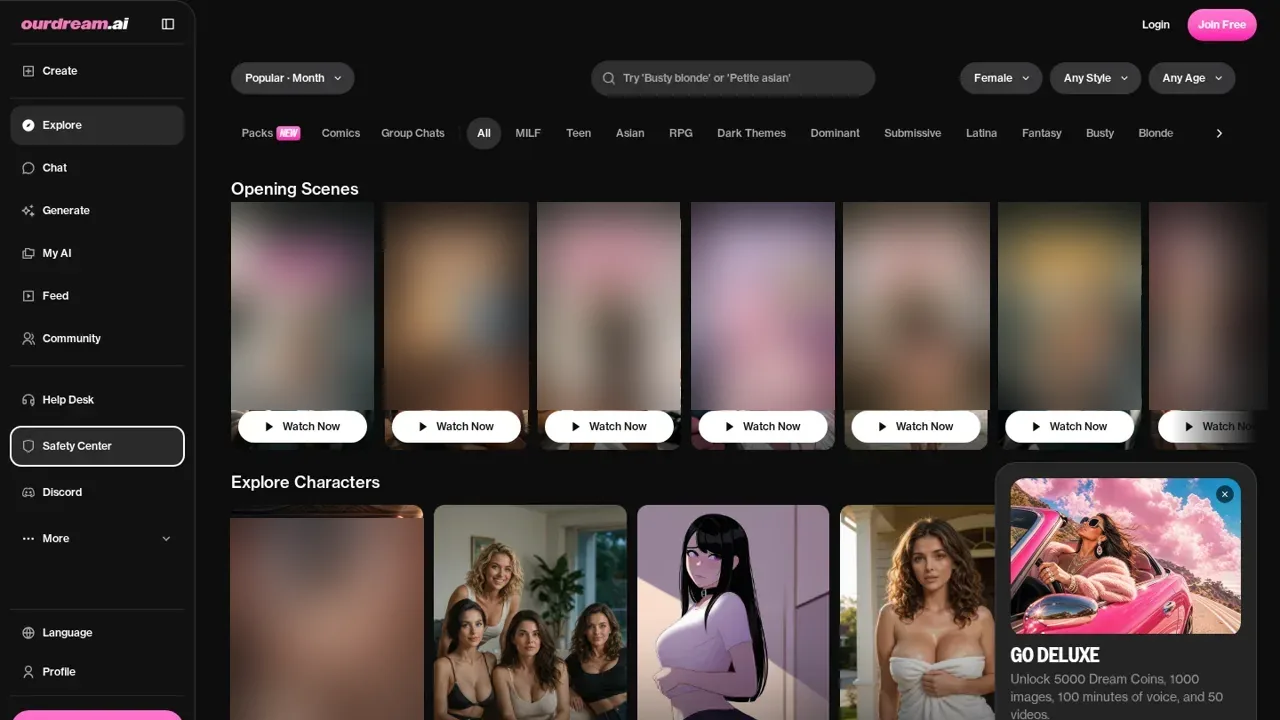
OurDream begins with the relationship as well as the character. Personality, background, occupation and interests help define how a fictional adult might behave, while relationship settings establish the starting connection. A new acquaintance and an established romantic partner need different opening assumptions.
Actions can also be separated from speech through the chat's action formatting. In a group conversation, selecting a character determines who should respond next, which provides a useful control when a scene involves more than one AI participant.
Premium costs $19.99 monthly or $119.88 upfront annually, equivalent to $9.99 per month. It includes unlimited paid text and 1,000 DreamCoins each month for coin-based extras. Free chat is limited. Deluxe costs $59.99 monthly and adds stronger models and longer memory, so the entry subscription should not be mistaken for access to every conversation upgrade.
A reunion between two fictional adults illustrates the value of defining the relationship first. A shared history and different interests provide material for conversation beyond introductions. Those settings establish the intended character; the resulting dialogue still needs to be judged on its own merits.
Speaker selection addresses another practical issue. A supporting character can answer a question without requiring every participant to react. That makes group scenes easier to direct, although an appearance or personality setting alone does not establish reliable long-term memory.

Candy AI's Clone Chat function copies a conversation up to the chosen point, allowing the new version to develop separately. A promising story can therefore take another direction without replacing the original exchange. That is a concrete advantage for writers who enjoy alternate outcomes.
Custom characters also support a switch from Classic to Roleplay Mode. The important restriction is that this switch is permanent for the character, rather than a setting that freely moves back and forth.
Premium costs $13.99 monthly with unlimited text and 100 tokens each month. Media uses the token balance, while free access provides a short chat sample. Annual totals conflict between plan and checkout records, so no single annual price is used here. The monthly charge provides the clearer comparison.
An unresolved invitation is a useful fictional branching point: one conversation can continue towards a reunion, while another follows a polite refusal. The clone preserves the earlier writing without requiring a full reconstruction of the scene.
Tone is less automated than a dedicated intensity slider would suggest. Character instructions and regenerated replies can influence it, but Candy does not provide a global intensity control. Clearing history also cannot fully preserve detailed conversation memory, so cloning, resetting and deleting should not be treated as interchangeable actions.
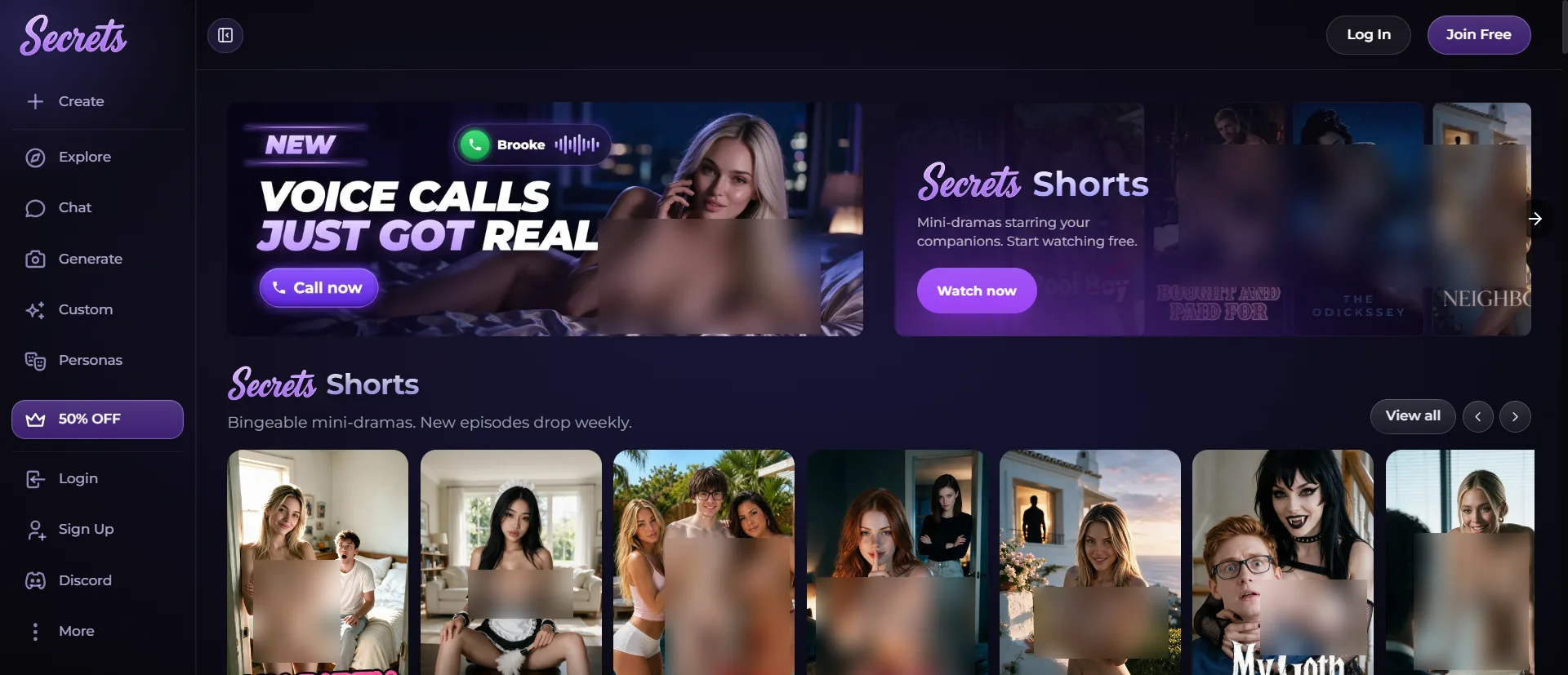
Secrets AI gives a developing story an editable reference through Lorebooks. Characters, relationships, locations and unresolved events can be recorded rather than left entirely inside a long transcript. Suggested changes can be reviewed, and incorrect details can be revised directly.
Universe Books provide reusable starting material for new chats. Each new conversation receives an independent copy, so a shared premise can support different outcomes without turning every version into the same continuing timeline.
The confirmed Premium annual charge is $109.99 upfront, shown as about $9.17 monthly, with unlimited messaging and 8,000 Moments each month. Media and other paid extras use Moments. A documented 200-Moment signup offer is a one-time balance. The monthly charge and complete higher-tier pricing remain unconfirmed; group-chat and specialised-model access should not be assumed from the base price.
A fictional romance running alongside a mystery may depend on a meeting place, an unresolved promise and what each character knows. Visible story records make those facts easier to inspect. An editable record improves control over the intended continuity without proving that every reply will use it correctly.
Revisions have consequences. Time Travel deletes the messages after the chosen point and has no undo, unlike a cloned conversation that preserves both versions. Later changes to a Universe Book also do not rewrite the independent copies already created for existing chats.
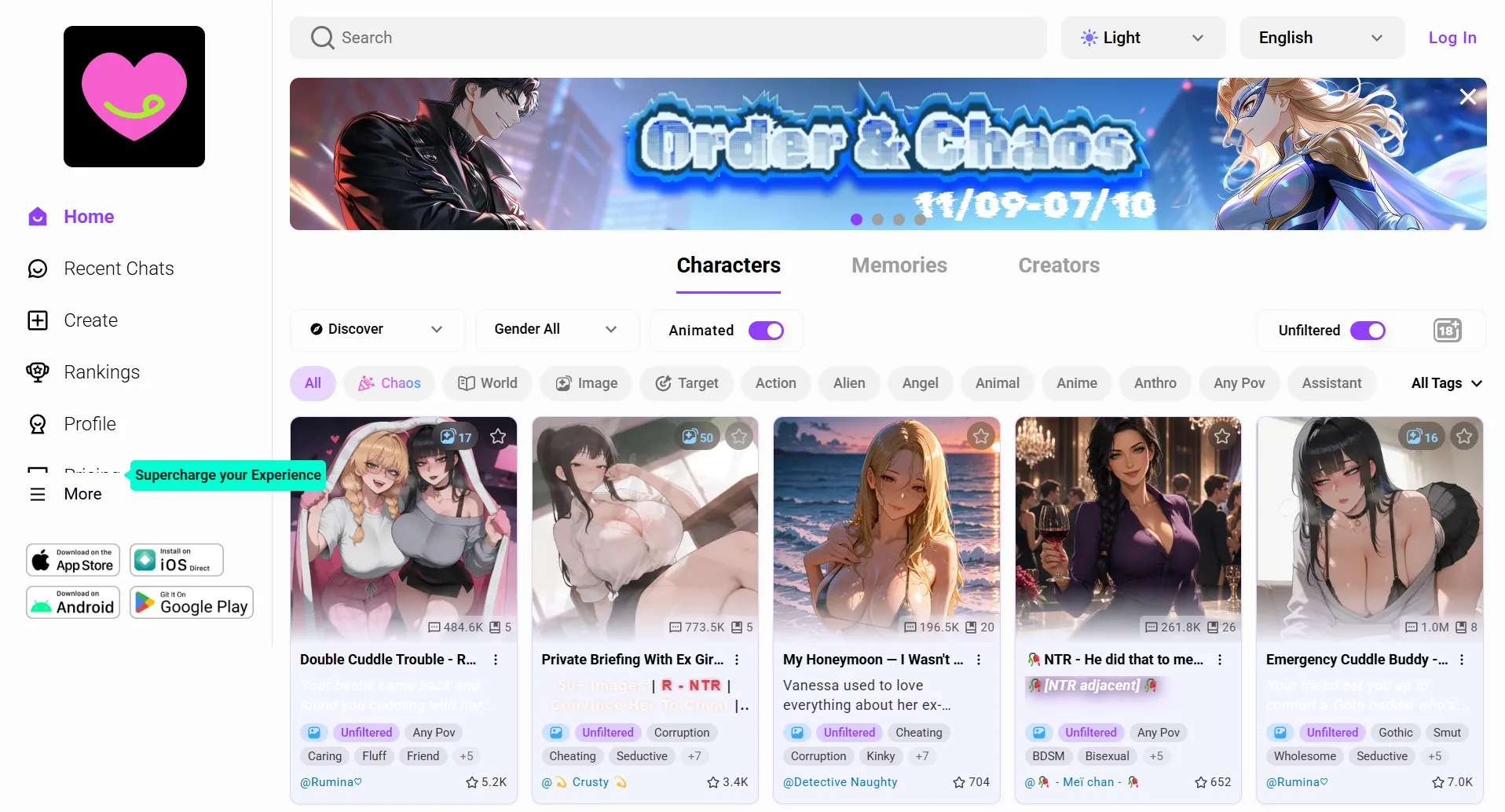
CrushOn AI gives the human participant an identity through Profile Cards. Different cards can establish different fictional roles, which helps distinguish a returning partner from a new visitor without relying only on the AI character's description.
Chat settings provide model selection and response-diversity controls, while group conversations allow several characters to participate. The emphasis is on directing the interaction rather than simply choosing a profile and accepting its default replies.
Standard costs $5.99 monthly with 2,000 credits. Free models support ongoing chat with reply and history restrictions. Luxe costs $39.99 monthly and is the first tier with adjustable reply length. A separate $39.99 monthly Chat Package covers unlimited Pro-model use without consuming membership credits; it does not replace the underlying membership.
Participant identity matters when the story depends on an existing relationship or a particular social role. A Profile Card gives that role a separate place from the companion's personality. Pinning a relevant exchange can then keep an important detail available without repeating the whole opening.
More settings do not automatically produce better prose. Greater response variation may be unsuitable for a tightly controlled scene, and an inexpensive membership does not establish unlimited access to the preferred model. Longer, adjustable replies also require a higher starting budget than the Standard price suggests.

Nomi separates a companion's lasting background from the current fictional situation. Backstory+ holds character information, while Current Roleplay describes what is happening now. That distinction helps an ongoing relationship move between scenes without making every temporary event part of the character's permanent identity.
Inclination settings guide the conversational style, and out-of-character communication offers a way to discuss direction separately from the fiction. These are useful controls for a slow-burn relationship that needs occasional correction without restarting the entire character.
Standard costs $15.99 monthly, $39.99 for three months or $99.99 upfront annually. Ordinary text is unlimited without a per-message coin charge, and the plan supports up to ten Nomis and ten group chats. Free access provides one Nomi with a daily chat cap. Optional extras use separate credits, and app-store or account-specific prices may differ.
A fictional couple can move from planning a trip to discussing a difficult invitation while keeping the same shared background. Updating the scene brief is more appropriate than rewriting the entire backstory each time. This makes the distinction between relationship continuity and current action particularly useful.
Out-of-character instructions also provide a place to correct a name, discuss tone or reinforce a boundary. They are conversation guidance rather than a guarantee of perfect obedience. Old scene notes still need attention, because an outdated setting can conflict with the intended next chapter.

Joi AI allows personality and conversation preferences to be adjusted after character creation. Communication style, emotional responses and interaction depth can be refined as the intended relationship becomes clearer, rather than depending entirely on the first character description.
Ready-made and community-created characters provide another starting point. Favourite conversations can be bookmarked, which is useful for revisiting an exchange, although a saved chat should not be confused with information automatically recalled during a new one.
Premium costs $13.99 for one month and includes 1,000 Coins. Documented offers charge $20.99 for three months or $47.99 upfront annually, with larger recurring Coin grants. Paid chat is included, while photos and short clips spend Coins. Free access is limited, and longer-term promotional prices require confirmation rather than being treated as permanent offers.
A character initially written as enthusiastic may feel too eager for a restrained romance. Changing the conversational preferences offers a way to revise that direction. The useful question is how the resulting dialogue fits the intended personality, not how many descriptive adjectives appear in the profile.
Bookmarking has a narrower purpose. It helps preserve access to a favourite exchange but does not establish a reusable world database, a separate story branch or perfect cross-chat recall. That makes Joi more relevant to companion-focused conversation than to a recommendation centred on elaborate narrative version control.
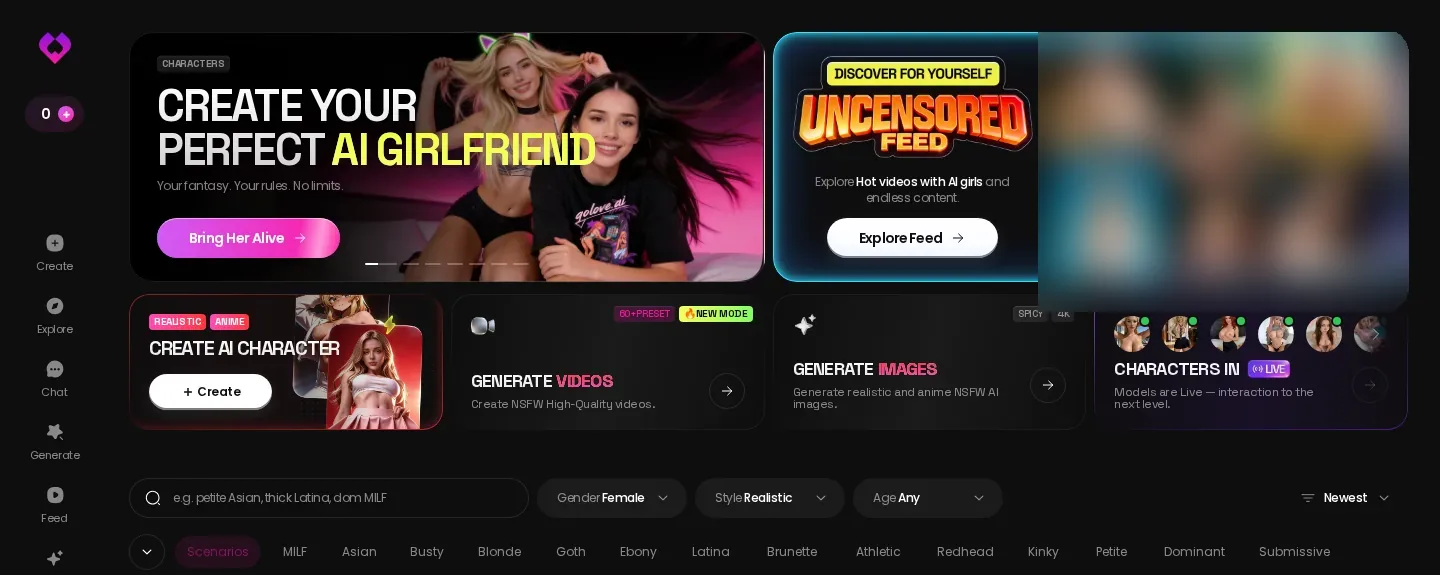
GoLove AI starts with a catalogue of fictional adult companions and romantic setups. Character profiles provide an initial identity, while scenario selection gives the conversation a situation to work from. That approach suits a short session without extensive preparation of a fictional world.
Custom characters and settings offer another route into roleplay. The central appeal is choosing a persona and beginning an interaction, rather than building a detailed reference system before the first message.
PRO costs $19.99 monthly with 50 Stars each month. ULTRA costs $59.99 monthly and adds a stronger model and a larger memory allocation. Stars support media extras rather than ordinary chat. Free access provides a short sample. The available plan detail does not establish unlimited text, and unrestricted feed access should not be interpreted as an unlimited message allowance.
A ready-made persona and a chosen setting reduce the amount of initial writing needed for a fictional first meeting. An adult character with an established interest gives a conversation something specific to develop beyond a greeting. This is a practical fit for casual romantic roleplay rather than a claim about superior dialogue.
The distinction matters for longer projects. Scenario selection alone does not prove that branching timelines, editable lore or detailed continuity controls are available. The higher-tier model and memory also create a substantial price difference when those capabilities become the main reason to subscribe.

Crushi AI's detailed character editor separates personality, context, the first message, memory notes and speech patterns. Those fields give the opening situation and the character's voice distinct places, rather than requiring every instruction to fit into one general description.
The conversation also supports editing an AI reply and pinning important messages. A line that takes the wrong tone can be revised before the story continues, which is useful when preserving a character's manner of speaking matters more than accepting the first generated response.
Premium costs $12.99 monthly with 300 recurring tokens and unlimited ordinary text. Media and some special chat actions use tokens separately. The free Explorer option has conversation limits, but published descriptions disagree about its daily allowance. A 100-token signup offer is a one-time balance, not the paid monthly grant.
A reserved fictional character might use short, careful sentences while still having a detailed background. Separate speech and context fields let those intentions coexist without assuming that a longer backstory requires longer dialogue. The first message can establish the immediate situation rather than beginning with an unrelated introduction.
Editing a reply provides another form of authorship: an unsuitable line can be corrected rather than accepted as part of the story. Saved notes and pinned messages still depend on the model using them appropriately. They should be viewed as controls over the available context, not a promise that inconsistencies disappear.
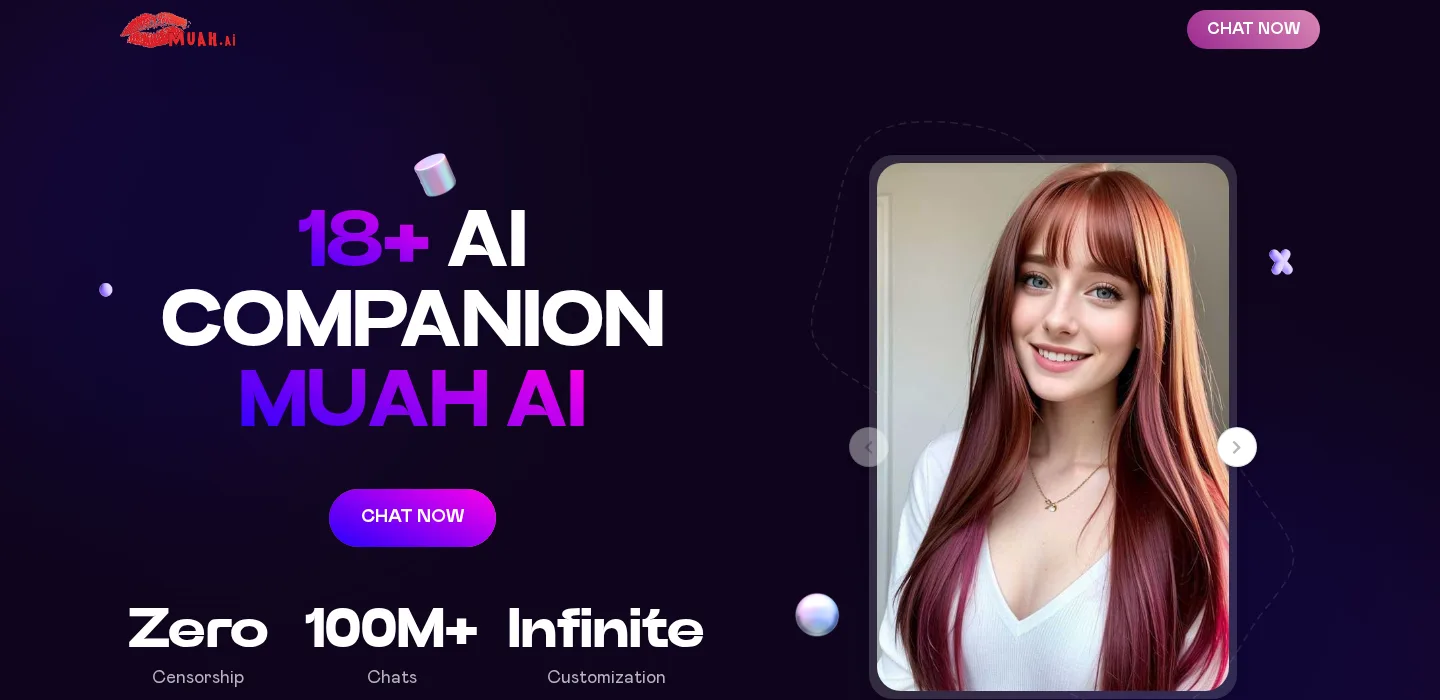
Muah AI distinguishes the Core Prompt, which defines the character and conversational intent, from the AI Core, which selects the underlying chat model. That separation suits a writer who wants to adjust the fictional personality without treating every writing issue as a reason to replace it.
Character Slots keep different companions and conversations separate. Changing the character within the same slot is not equivalent to starting a clean conversation, so slot management matters when several unrelated stories are being developed.
VIP costs $19.99 monthly or $69.99 upfront annually and includes unlimited text with longer replies. UHD costs $49.99 monthly for a larger memory allowance and other upgrades. Free access is restricted. Access to particular models and advanced settings varies, so VIP should not be treated as a guarantee of every available control.
Separating the character description from model settings makes troubleshooting more deliberate. An inconsistent personality may call for clearer instructions, while a forgotten event may require attention to the conversation summary. Neither problem is automatically solved by increasing response variation.
Privacy is a material caution: Have I Been Pwned includes Muah.AI in its breach register. Current remediation has not been independently assessed here. The presence of creative controls therefore does not justify a blanket privacy endorsement or assurances about the safety of sensitive chat content.
Interactive writing works better when the AI does not decide every action for the human participant. A clearly defined role, boundaries and out-of-character direction help establish that division. CrushOn's Profile Cards and Nomi's separate scene notes approach different parts of this problem; neither removes the need to assess how replies actually behave.
A character background describes identity. Recent chat records current events. A summary or Lorebook carries selected information forward. Those functions are related but not interchangeable, and an impressive memory label reveals little about how mistakes can be repaired. Visible, editable records are particularly relevant when a story depends on names, promises and unresolved events.
Short messaging-style exchanges suit casual conversation, while paragraph replies allow more narration around an action. Secrets explicitly separates those formats; CrushOn puts adjustable reply length on a higher tier. Longer output is not inherently better roleplay: a lengthy response can still leave little room for the other participant to make a choice.
Unlimited ordinary text, unlimited use of a particular model and unrestricted media are separate purchases. Nomi's ordinary text plan and CrushOn's membership-plus-model structure illustrate that difference. A useful budget begins with the preferred writing experience and then includes any required upgrade, rather than comparing only the smallest number on a subscription card.
A clone preserves an alternative, while a rewind replaces what followed the chosen point. Candy and Secrets demonstrate that distinction clearly. Editing controls need the same scrutiny, because changing an earlier message can affect later writing. Exact dialogue is better preserved through an available export or separate copy than through a summary intended only to carry context.
A fictional name does not make an account anonymous, and a private character-visibility setting does not establish end-to-end encryption. Privacy assessment needs evidence about stored content, deletion, service access and incident history. No app receives a security ranking here, and payment discretion is not treated as proof that conversation content is protected.
The best adult text roleplay apps differ most in how much control they provide over a developing conversation. Secrets AI suits editable story records, Nomi separates recurring character identity from the current scene, and Candy AI preserves alternative paths through cloned chats. Crushi adds direct control over opening lines and character speech, while CrushOn offers participant personas and model settings.
The stronger choice depends on the intended writing style and the cost of the features needed to support it. Unlimited base text is useful, but it does not guarantee the preferred model, long replies or reliable continuity. A suitable app leaves room for the participant's decisions, makes important limits understandable and provides a workable way to correct the story when it drifts.
No. These selections generate replies through AI-controlled fictional characters. They are relevant to solo interactive writing and simulated relationships, rather than matching two human roleplay partners. Multiple characters in a group conversation still do not establish the presence of other human participants.
Candy AI's Clone Chat copies the conversation history and allows a separate continuation without changing the original. Secrets AI's Time Travel behaves differently: it returns to an earlier point and deletes the later messages. A preserved branch and a destructive rewind should not be treated as the same feature.
Yes. Text can carry the dialogue, actions and relationship development without generated pictures. OurDream, Candy AI and Nomi have paid ordinary-text allowances distinct from media spending. Disabling optional media replies, where supported, also helps keep the interaction focused on writing rather than visual extras.
No. A transcript that remains visible is not necessarily supplied in full to the model on every turn. Nomi's scene notes, Secrets' Lorebooks and Muah's summaries represent different ways of supplying relevant context. Their existence does not establish exact recall of every earlier sentence.
That depends on the model and the restrictions. CrushOn offers ongoing free-model access, but reply and history limits still matter. Other free options provide capped conversations or short samples. A signup token balance does not establish a recurring allowance or access to every writing feature.
A clear personality, speech style and stable background give the model more specific instructions. Crushi separates speech patterns from context, while Joi allows conversational preferences to be refined. These are useful controls, but consistency still needs to be assessed through the actual dialogue rather than assumed from the settings.
No. Adult-friendly positioning does not remove age requirements, content restrictions or moderation. Candy's roleplay instructions remain subject to its safety systems, and Muah's adult features remain subject to its terms. The label alone also says nothing about memory quality, reply length or unlimited access.
Some provide a mobile browser experience or a home-screen installation rather than a native download. OurDream documents a progressive web app and no native app. A home-screen icon should therefore not be treated as evidence of an App Store or Google Play version.